
Table of Contents
Social Media Best Practices
Reputation Management Best Practices
Website Best Practices
SEO Best Practices
Your Plan
Are you ready to strengthen your digital marketing for the rest of 2026? You are in the right place. Digital marketing may feel more complicated than it did a few years ago, but the fundamentals are still manageable when you focus on the right priorities.
Today’s customer journey is rarely a straight line. Someone may discover your business through a Reel, compare your reviews on Google Maps, ask an AI search tool for recommendations and then visit your website before deciding whether to call, visit or buy.
That means your social media, business listings, reviews, website, search visibility and measurement cannot operate as separate projects. They need to reinforce one another.
Artificial intelligence has changed how content is created and how information is discovered, but it has not replaced the need for useful information, genuine expertise, trustworthy reviews and a website that makes it easy to take the next step.
This guide breaks down the digital marketing practices that matter most in 2026 and the changes your business should be preparing for as we head into fall and winter.
1. Choose Fewer Channels and Give Each One a Job
Your business does not need to maintain an active presence on every platform. Choose one primary channel where your audience is already engaged, one secondary channel that supports a different objective and only add more when you have the resources to maintain them.
For example, Facebook may support community communication, Instagram may showcase products and people, LinkedIn may build professional credibility and YouTube may house searchable educational content.
A smaller number of active, useful profiles will serve your business better than several outdated or abandoned accounts.
2. Build Recognizable Content Series
Stop treating every post as an isolated idea. Create repeatable series that make planning easier and give your audience a reason to recognize and follow your content.
A practical content mix may include:
• Expertise: answers, demonstrations, comparisons and how-to content
• Proof: reviews, results, case studies and customer stories
• Community: employees, partners, events and local involvement
• Offers: products, services, promotions and clear next steps
Repeating a useful format is not boring. It is how a brand becomes recognizable.
3. Create for Attention and Action
Every post should have one primary purpose. It may educate, entertain, start a conversation, build trust or encourage the audience to take a specific next step.
Lead with the most useful or interesting part of the message. Use a clear opening sentence, readable on-screen text and captions for video. Finish with one relevant call to action rather than asking people to like, comment, share, visit, call and buy all at once.
Before publishing, ask: What should someone understand, feel or do after seeing this?

4. Prioritize Original, Platform-Native Media
Short-form video remains useful, but video is not the only format worth creating. Carousels, before-and-after images, employee features, customer stories, product demonstrations and well-designed educational graphics can all perform well when they are relevant to the audience.
Create content specifically for the platform whenever possible. Avoid repeatedly uploading low-resolution files, recycled creative with another platform’s watermark or generic stock imagery that could belong to any business.
Real people, real products, real locations and real expertise are increasingly valuable differentiators in a feed filled with mass-produced content.
5. Treat Engagement as Customer Service
Publishing is only half of social media. Monitor comments, messages, tags and mentions, and respond while the conversation is still relevant.
Do not limit responses to compliments. Questions, concerns and constructive criticism are opportunities to demonstrate how your business communicates and solves problems.
The goal is not to generate empty engagement. It is to create meaningful interactions that strengthen the relationship between your business and its customers.
6. Collaborate Where Audiences Genuinely Overlap
Collaborations can introduce your business to a relevant audience without relying entirely on advertising.
Consider creating content with neighboring businesses, vendors, community organizations, employees, customers or creators whose audience realistically overlaps with yours. Use collaboration features when appropriate and disclose paid or gifted relationships clearly.
A smaller, trusted local partner may create more meaningful results than an account with a large but unrelated audience.
7. Use Keywords, Hashtags and Location Signals with Intention
Hashtags are no longer a complete discovery strategy. Use a limited group of relevant hashtags when they help categorize the content, but do not add a large block of generic tags simply to fill space.
Use clear keywords naturally in your caption, profile description, on-screen text and video dialogue. Add location information when the post is relevant to a specific community or service area.
Write for people first, but make the subject of the post easy for both people and platform search systems to understand.
8. Use AI as an Assistant, Not a Replacement for Expertise
AI tools can help brainstorm topics, organize an outline, create variations or repurpose existing material. They should not be used to flood your channels with generic content that has not been reviewed.
Add your own experience, examples, opinions, photographs and results. Confirm facts before publishing, and make sure the finished content still sounds like your business.
Efficiency is useful. Sameness is not.
How Social Media Starts the Conversation
What you create on social media should do 1 of 2 things. It should make someone THINK or make them FEEL. Social media is a tool to build community, create a brand culture and reach new audiences. With consistent posting, hashtags, reels, collabs and carousels, you will create greater brand awareness and a stronger community identity.
Online Reputation Management & Review Best Practices
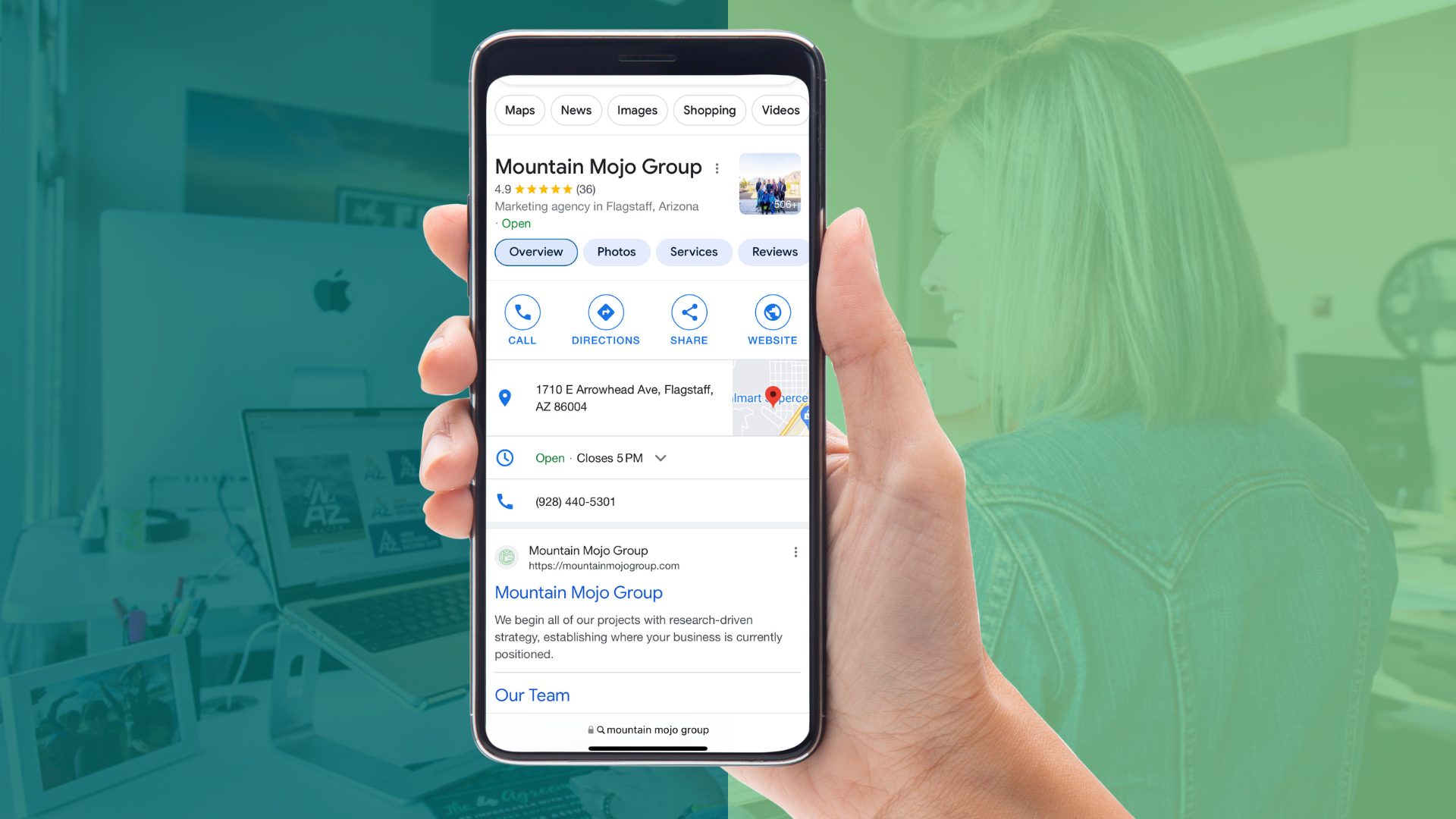
Your online reputation is not limited to your star rating. It includes the accuracy of your business information, the quality of your profiles, what customers say about you and how your business responds.
Accurate, consistent information also helps search engines and AI systems understand who you are, what you offer and where you operate.
1. Maintain Your Core Business Listings
Start with your Google Business Profile and then review the other listings that matter in your industry or location.
Confirm that your business name, address, phone number, website, hours and primary category are correct. Review each location separately when managing a multi-location business.
Remove duplicates, update outdated photos and make sure the website link leads to the most relevant page.
2. Keep Your Google Business Profile Complete and Active
Add accurate services, products, descriptions, photos, social links and special hours when those features are available for your profile.
Use posts to share meaningful updates, offers, events or seasonal information. Do not publish filler simply to appear active. Prioritize information that helps someone decide whether to visit, call or buy.
Before a holiday, weather event or seasonal promotion, confirm that your hours and operational information are current.
3. Make Your Expertise and Location Easy to Verify
Your website, social profiles and business listings should tell the same basic story.
Use a consistent business description and clearly identify your locations, service areas, credentials and primary services. Add real photographs of your team, storefront, work and products.
Conflicting information can frustrate customers and make it more difficult for search platforms to confidently interpret your business.
4. Monitor and Respond
Assign responsibility for checking reviews, questions, profile changes, direct messages and brand mentions.
Respond promptly, but do not use the same canned response for every interaction. A useful response should acknowledge the customer, address the specific situation and explain the next step when one is needed.
Website & Mobile User Experience Best Practices
1. Ask at the Right Moment
Ask for a review after a genuine customer experience has been completed: after a purchase, delivery, appointment, project or resolved service request.
Do not ask only the customers you believe will leave five stars. A compliant review process gives eligible customers the same opportunity to provide honest feedback.
2. Make the Process Easy
Provide a direct review link through a follow-up email, text message, printed receipt or QR code. Keep the message short and explain that honest feedback helps both the business and future customers.
Do not tell the customer what rating to leave or provide a script for what the review should say.
3. Never Buy, Manufacture or Gate Reviews
Do not purchase reviews, create fake customer accounts, use AI to fabricate testimonials or offer a reward that requires a positive rating.
Avoid review-gating systems that send happy customers to a public review site while directing unhappy customers somewhere private. Ask consistently and allow the customer to decide what to share.
4. Respond to Positive and Negative Reviews
Thank customers for positive feedback without turning every response into a sales pitch.
For a negative review, remain calm, acknowledge the concern and move complex or private details to an offline conversation. Do not argue publicly or reveal personal information.
A professional response is written for both the reviewer and every future customer who may read the exchange.
5. Reuse Reviews Carefully
Reviews can become valuable website, social media, email and sales content, but preserve the meaning of the original feedback.
Obtain permission when appropriate, identify the source clearly and do not edit a review in a way that changes what the customer communicated. Never reuse a review for a substantially different product or service as though it were written for that offering.
Local SEO & Search Visibility Best Practices
1. Make Every Page Easy to Use
Each page should have one clear purpose and one primary call to action. Make it easy for visitors to understand what you offer, where you are located and how to contact, visit or buy from you.
2. Prioritize Mobile Speed
Test your website on an actual phone. Compress large images, remove unnecessary animations and confirm that menus, forms and buttons load quickly and work correctly.
3. Build Trust
Use real photos, customer reviews, credentials, service areas and accurate contact information. Include an updated privacy policy and avoid relying too heavily on generic stock photography or AI-generated content.
4. Keep Your Website Current
Review important pages quarterly and before seasonal campaigns. Remove expired promotions, update business hours, repair broken links and confirm that products, services and employee information are accurate.
SEO Best Practices
1. Start with Strong SEO Fundamentals
Use clear page titles, headings, internal links and helpful content. Maintain your sitemap, monitor Google Search Console and make sure search engines can access and understand your important pages.
2. Answer Real Customer Questions
Create content around the questions customers ask before calling, visiting or buying. Provide direct answers supported by real examples, experience, photos and practical details.
3. Strengthen Local Search Visibility
Keep your Google Business Profile accurate and complete. Update hours, services, photos and location information, and create useful website pages for the communities and service areas you genuinely serve.
4. Prepare for AI-Powered Search
Search engines and AI tools increasingly summarize information before users visit a website. Make your content clear, current, specific and credible so it can be understood and referenced across different search experiences.
Digital marketing in 2026 does not require your business to be everywhere or follow every new trend.
Focus on building a connected system: social media earns attention, reviews build trust, your website supports decisions and search helps customers find accurate answers.
Start with the foundation, create content based on real expertise and measure the actions that contribute to leads, customers and revenue.
Small, consistent improvements will create better results than chasing every new platform update.

Michelle has been with Mountain Mojo Group as Content Creator and Lead Social Media Manager since early 2020. Throughout her time here, she has led efforts in graphic design, social media, content writing, and branding strategies for our clients.
Never Miss a Thing.
Need more Mojo in your life? Sign up for our monthly newsletter! Get the inside scoop on Mojie life, client highlights, website projects, new Mojo clients, marketing tips & tricks, and so much more! Your inbox could use more Mojo!
2026 Social Media Best Practices for Small Businesses