
Hardware Marketing Series · Part 8 of 16
Once your goals, personas and branding are clear, the next question becomes unavoidable: is your current marketing improving visibility for the right customers?
That’s where a channel audit comes in. Most hardware stores don’t have a marketing problem. They have a visibility problem. Effort is happening, but it isn’t always showing up in the places, messages or moments that matter most to their target customers.
At Mountain Mojo Group, we see this often. Social posts go out consistently. Ads are running. Content is being published. But without a regular audit, those efforts aren’t always connected back to goals, personas or buying behavior. Here’s how to audit your social media, Google Ads and SEO in a practical way, so you can decide what to keep, what to adjust and what to stop doing altogether.
This guide is Part 8 of our 16-part hardware marketing series. Each article walks through one step in building a connected marketing strategy for independent hardware stores and lumberyards, from organizational clarity to a complete marketing system built for long-term growth.
Free template · Step 8 of 16
Channel Audit Template
This template helps you:
- Audit social media, Google Ads and SEO
- Identify gaps and misalignment
- Prioritize channel improvements
- Align effort with your personas and goals
Why Marketing Channel Audits Matter for Hardware Stores and Lumberyards
Marketing channels don’t exist in isolation. Each one should support your organizational goals, your revenue targets and your target personas.
Without a regular audit, it’s easy to overinvest in channels that don’t convert, ignore channels that quietly perform well and chase trends that don’t match how your customers behave.
A channel audit helps answer questions like:
- Are we showing up where our personas actually look?
- Is our messaging consistent across channels?
- Are we measuring the right things?
- Is our effort proportional to our results?
The goal isn’t to critique past decisions. It’s to make smarter ones going forward.
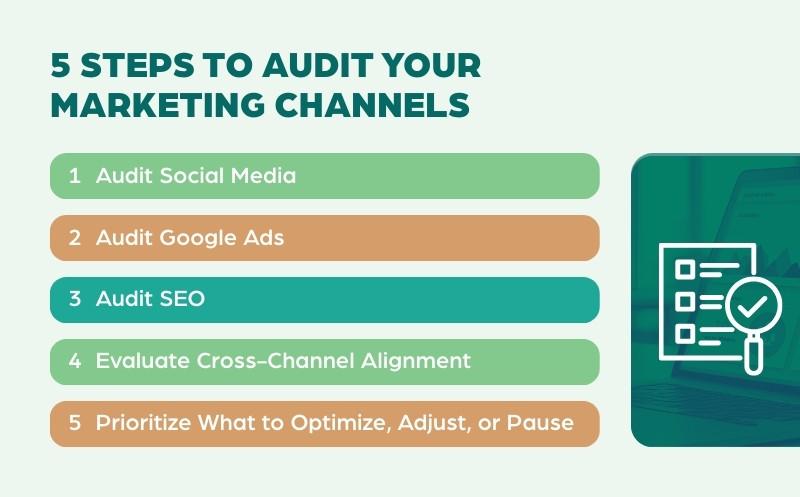
Step 1: Audit Social Media Performance
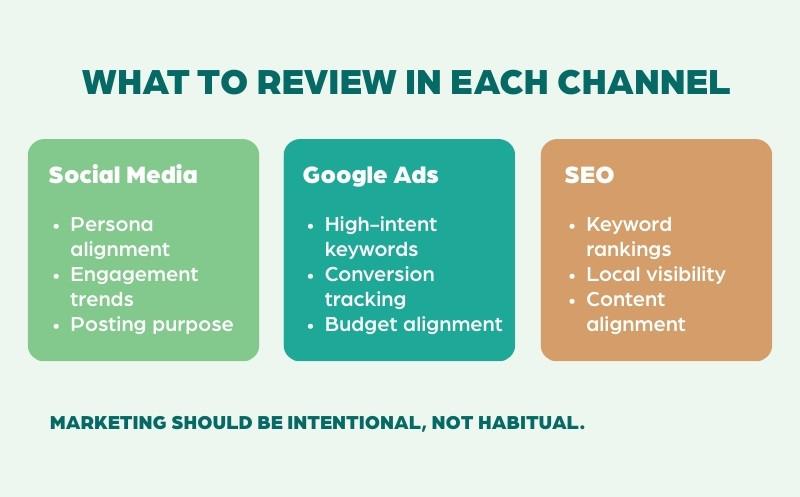
Start with your social media presence. Look at which platforms you’re active on, posting frequency and consistency, engagement trends and content themes. Ask:
- Which platforms align with our target personas?
- What content earns engagement or saves?
- Are we posting with a purpose, or just to post?
For hardware stores, social media usually supports awareness, education and community connection. It isn’t always a direct sales channel, and that’s okay. But it should still build brand awareness, trust and future conversions. If a platform consistently shows low engagement and doesn’t match your personas, it may not be worth prioritizing. (We cover this in depth in How to Build a Social Media Plan.)
Step 2: Audit Google Ads Performance
Google Ads can be powerful, but only when they’re aligned with intent. Review your active campaigns and keywords, conversion tracking, budget allocation and the search terms triggering your ads. Ask:
- Are ads aligned with our revenue goals?
- Are we bidding on high-intent keywords?
- Are conversions clearly defined?
- Are we sending traffic to relevant landing pages?
For hardware stores, Google Ads usually perform best when focused on local intent, service- or department-specific searches, and pro or contractor needs. An audit often reveals wasted spend, unclear conversion tracking or opportunities to sharpen targeting. (More in How to Build Social Media & Google Ads Campaigns.)
Step 3: Audit SEO Performance
SEO is a long-term investment, but it still needs direction. Review your website traffic trends, top-performing pages, keyword rankings and local SEO presence, including your Google Business Profile. Ask:
- Are we ranking for the terms our personas search?
- Is our content aligned with customer questions?
- Are pages optimized for local intent?
- Is technical SEO being maintained?
An SEO audit shows whether your content supports awareness, education or conversion, and where the gaps are. For a deeper breakdown, see the SEO strategy guide in this series.
SEO Note: SEO supports visibility when customers are actively searching, often with high intent. Unlike short-term tactics, it compounds over time, but only when it’s aligned with real customer behavior and maintained consistently.
Step 4: Evaluate Cross-Channel Alignment
Channels should work together, not compete for attention. Review messaging consistency, visual alignment and calls-to-action across channels. Ask:
- Does social support SEO or ads?
- Do ads reinforce our brand positioning?
- Is the customer journey clear?
Misalignment creates friction and weakens impact. Alignment helps effort compound.
Mojo Tip: Look at your channels side by side. Open your website, social media, ads and email at the same time. If they don’t feel like the same business, alignment work is needed.
Step 5: Identify What to Optimize, Pause or Double Down On
After reviewing each channel, sort what you found into three simple categories:
- What’s working and should be protected or expanded?
- What needs adjusting to better support goals and personas?
- What may no longer be worth the effort right now?
That becomes your action list. Not everything needs fixing at once. Prioritize based on impact, alignment and capacity, not urgency or habit. Some channels just need refinement. Others may need a pause to free up time and budget for what matters most.
If you’re unsure how to prioritize or want a second set of eyes on what you uncovered, book a discovery call with Rand.
Quick Action Steps for Hardware Store and Lumberyard Owners
Want to start auditing your marketing channels? Begin here:
- List your active marketing channels. Note everywhere your store shows up online: social media, Google Ads, search results, email and your website.
- Review performance data. Look at engagement, traffic, conversions and visibility to see which channels contribute to results.
- Compare channels to your target personas. Check whether your marketing appears where your most important customers actually spend time.
- Evaluate messaging consistency. Make sure your brand voice, visuals and calls-to-action line up across platforms.
- Prioritize improvements. Decide which channels to optimize, which to pause and where more focus could drive better results.
Download the Channel Audit Template
To help you complete this process, we’ve created a free Channel Audit Template built specifically for hardware stores and lumberyards. It builds directly on the persona and brand audit work from earlier in the series.
Free template · Step 8 of 16
Channel Audit Template
This template helps you:
- Audit social media, Google Ads and SEO
- Identify gaps and misalignment
- Prioritize channel improvements
- Align effort with your personas and goals
Make Marketing Work Smarter
A channel audit makes marketing intentional again. When social media, Google Ads and SEO are aligned with your goals and personas, effort becomes more efficient and results are easier to track. It’s the same approach we use at Mountain Mojo Group to help hardware stores focus on what actually drives growth.
In the next guide, we’ll cover how to build and maintain your Google Business Profile, one of the most important local visibility tools for hardware stores. Later in the series, we’ll turn these insights into a clear marketing budget.
Want help applying this to your store?
Let’s talk about what’s working, and what could work better.
The Hardware Marketing Series
This article is part of our complete marketing strategy framework for independent hardware stores, lumberyards, farm stores and ag stores, including retailers affiliated with Ace Hardware, True Value and Do it Best, and suppliers such as Orgill. Work through all 16 steps to build your strategy in a structured, intentional way. See the full series.
- How to Create Organizational Goals for Your Hardware Store
- How to Create Revenue Goals
- How to Perform a Market Share & Competitive Analysis
- How to Create Customer Surveys
- How to Define Mission, Vision & Core Values
- How to Audit Your Branding
- How to Create Target Personas with Shopping Behaviors
- How to Audit Social Media, Google Ads & SEO (you’re here)
- How to Build & Maintain Your Google Business Profile
- How to Build a Social Media Plan
- How to Build an SEO Strategy
- How to Build Social Media & Google Ads Campaigns
- How to Build an Email Newsletter
- How to Build a Content Calendar
- How to Build a Marketing Budget
- How to Build a Holistic Marketing Strategy