
Hardware Marketing Series · Part 4 of 16
Customer surveys give hardware stores and lumberyards something incredibly valuable: direct insight from the people who actually shop with you. No guesses. No assumptions. Real feedback.
Many stores make decisions based on internal priorities, sales data or competitive pressure. Those inputs matter, but they don’t always reflect how customers actually experience your store.
At Mountain Mojo Group, we see the strongest marketing strategies built on a mix of internal priorities and outside insight. Surveys bridge that gap by revealing what customers value, how they see your store and why they choose you, or don’t. Here’s how to create surveys that deliver useful, actionable insight without overwhelming customers or adding work for your team.
This guide is Part 4 of our 16-part hardware marketing series. Each article walks through one step in building a connected marketing strategy for independent hardware stores and lumberyards, from organizational clarity to a complete marketing system built for long-term growth.
Free template · Step 4 of 16
Customer Survey Template
This template helps you:
- Plan your survey: tool, timing, placement and incentive
- Structure it in five proven sections
- Test your assumptions against what customers say
- Track response goals and key patterns
Why Customer Surveys Matter for Hardware Store Marketing
Marketing decisions are stronger when they’re informed by customer input. Without surveys, hardware stores often rely on:
- Assumptions based on anecdotal feedback
- Internal opinions
- Industry “best practices” that may not apply locally
Customer surveys help answer questions like:
- Why do customers choose our store?
- What do they value most: price, service, convenience or expertise?
- How did they first hear about us?
- What would make them shop more often?
Surveys don’t need to be complex to work. A few well-crafted questions can uncover insights that shape messaging, channel selection and customer experience.
A real-world example: In one Mojo engagement, a hardware retailer believed price was the main driver of customer decisions. A short survey revealed something different: customers consistently ranked helpful staff and in-stock availability above price. That insight shifted marketing away from discounts and toward service, expertise and convenience, leading to stronger engagement and more consistent traffic.
At Mountain Mojo Group, we use survey data to help hardware stores and lumberyards refine positioning, validate personas and prioritize marketing based on what customers actually care about.
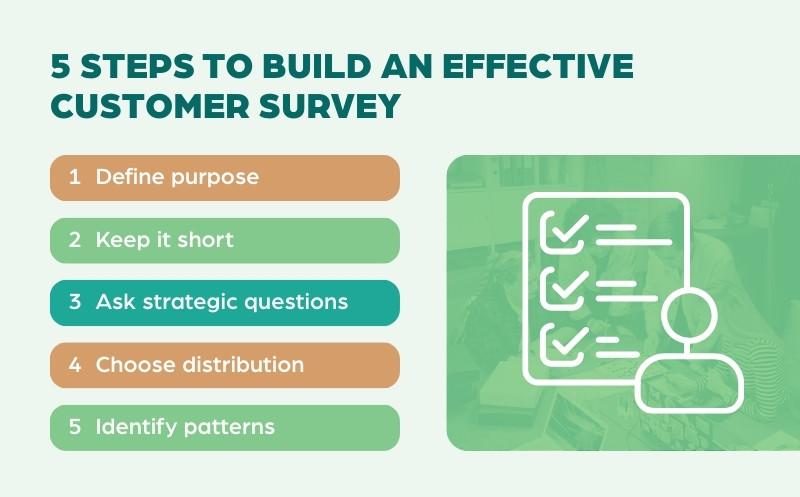
Step 1: Define the Purpose of Your Survey
Before writing questions, be clear about why you’re running a survey. Common goals include:
- Understanding how customers make decisions
- Gathering feedback on experience or service
- Identifying opportunities for improvement
- Validating assumptions about marketing channels
- Supporting persona development
Don’t try to accomplish everything in one survey. Short, focused surveys perform better and give clearer insights. Ask yourself:
- What do we want to learn?
- How will we use this information?
- What decisions will this survey inform?
A clear purpose leads to better questions, and better results.
Step 2: Keep Surveys Short and Easy
One of the biggest mistakes hardware stores make is creating surveys that are too long. Customers are more likely to respond when a survey takes 3–5 minutes or less, uses clear, simple language and skips unnecessary questions.
Focus on multiple-choice questions, rating scales and one or two optional open-ended questions. Examples of effective questions:
- How often do you shop at our store?
- What brought you in today?
- What do you value most when choosing a hardware store?
- How likely are you to recommend us?
Short surveys respect customers’ time and lead to higher completion rates.
Mojo Note: If you’re skimming this section, your customers probably skim surveys too. Keep it quick and easy, especially for contractors and everyday shoppers who are short on time.
Step 3: Ask Questions That Support Marketing Decisions
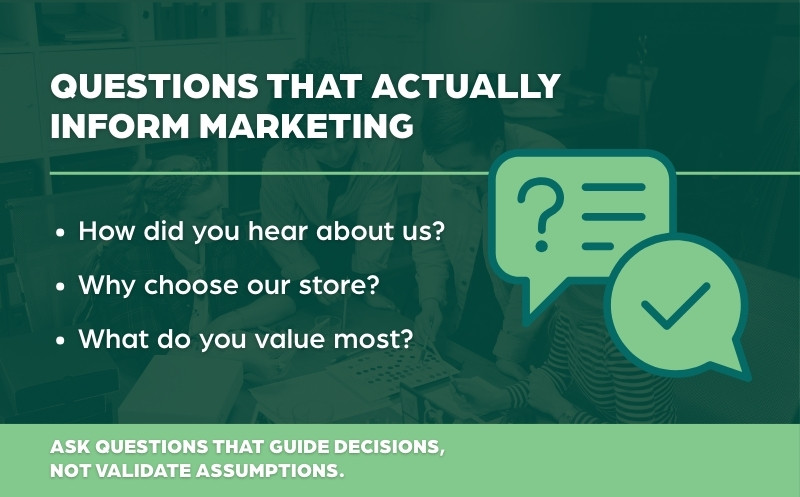
The most valuable survey questions are the ones that inform marketing strategy. For example:
- How did you hear about us?
- What made you choose our store over others?
- Which departments do you shop most often?
- Do you consider yourself a DIY customer or a pro?
These questions help identify your most effective marketing channels, key differentiators, customer segments and behaviors, and messaging opportunities.
Avoid leading questions that push customers toward a specific answer. The goal is honest feedback, not validation.
Survey insights will also guide later steps in this series, including target personas, content strategy, advertising and budgeting.
Step 4: Choose the Right Distribution Method
Where and how you share surveys matters. Common options include:
- Email surveys
- QR codes in-store
- Post-purchase follow-ups
- Website pop-ups (used sparingly)
Choose a method that fits how your customers behave and doesn’t disrupt their experience.
Pro Tip: A small incentive, like a gift card or future discount, can increase participation. It isn’t always required, though. Customers are often happy to share feedback when they understand how it will be used.
Step 5: Review Results and Identify Patterns
Once responses are in, look for patterns rather than individual comments. Focus on:
- Consistent themes
- Frequently mentioned strengths or frustrations
- Differences between customer types (DIY, homeowner and pro)
Survey data is most valuable when it informs decisions instead of getting filed away. Many owners also find that conversations with other independent hardware retailers add context to their findings and reveal patterns they might miss on their own.
At Mojo, we use survey insights to help hardware stores refine messaging, improve customer experience and prioritize marketing that matches real customer needs. If you’d like help interpreting results or setting up a survey that fits your store, book a discovery call with Rand.
Quick Action Steps for Hardware Store and Lumberyard Owners
Want to start gathering better customer insight this month? Begin here:
- Define the goal of your survey. Decide what you want to learn before writing questions. Focus on one or two priorities, such as customer experience, marketing awareness or product selection.
- Write 5–8 clear questions. Keep it short. Mostly multiple-choice, plus one or two optional open-ended questions, usually works best.
- Choose a simple distribution method. Send it by email, add a QR code at checkout or include a follow-up request after purchases.
- Encourage participation. Consider a small incentive, such as a gift card drawing or future discount.
- Look for patterns in the results. Focus on repeated themes, then use them to guide messaging, customer experience and future strategy.
Download the Customer Survey Template
To make this easy, we’ve created a free Customer Survey Template built specifically for hardware stores and lumberyards. It gives you a survey plan, five core survey sections with guidance on what each should cover, tips for higher response rates and space to record what customers tell you.
It builds on the organizational goals, revenue goals and market share and competitive analysis work from earlier in the series.
Free template · Step 4 of 16
Customer Survey Template
This template helps you:
- Plan your survey: tool, timing, placement and incentive
- Structure it in five proven sections
- Test your assumptions against what customers say
- Track response goals and key patterns
Let Customers Guide the Strategy
Customer surveys provide clarity that internal planning alone can’t. Used thoughtfully, they help hardware stores understand what matters most to customers and how marketing can better support growth.
It’s the same approach we use at Mountain Mojo Group: combining internal goals with outside insight to build marketing strategies that feel intentional and effective.
In the next guide, we’ll cover how to define your mission, vision and core values so they reflect both your business goals and customer expectations.
Want help applying this to your store?
A short discovery call can help you review survey results and turn them into action.
The Hardware Marketing Series
This article is part of our complete marketing strategy framework for independent hardware stores, lumberyards, farm stores and ag stores, including retailers affiliated with Ace Hardware, True Value and Do it Best, and suppliers such as Orgill. Work through all 16 steps to build your strategy in a structured, intentional way. See the full series.
- How to Create Organizational Goals for Your Hardware Store
- How to Create Revenue Goals
- How to Perform a Market Share & Competitive Analysis
- How to Create Customer Surveys (you’re here)
- How to Define Mission, Vision & Core Values
- How to Audit Your Branding
- How to Create Target Personas with Shopping Behaviors
- How to Audit Social Media, Google Ads & SEO
- How to Build & Maintain Your Google Business Profile
- How to Build a Social Media Plan
- How to Build an SEO Strategy
- How to Build Social Media & Google Ads Campaigns
- How to Build an Email Newsletter
- How to Build a Content Calendar
- How to Build a Marketing Budget
- How to Build a Holistic Marketing Strategy