
Hardware Marketing Series · Part 1 of 16
Running a hardware store or lumberyard means juggling a lot of moving parts. Marketing often gets added without much structure, which is why it can feel overwhelming or disconnected from results.
Here’s what we see most often: marketing struggles are rarely caused by a lack of effort. They’re caused by a lack of organizational clarity.
Without clear goals, marketing becomes reactive and hard to measure. Organizational goals provide the framework that keeps every decision focused, aligned and intentional.
This guide is Part 1 of our 16-part hardware marketing series. Each article walks through one step in building a connected marketing strategy for independent hardware stores and lumberyards, from organizational clarity to a complete marketing system built for long-term growth.
Free template · Step 1 of 16
Organizational Goals Template
This template helps you:
- Define 3–5 core organizational goals
- Assign ownership and accountability
- Set measurable targets and timelines
- Connect goals directly to marketing efforts
Why Organizational Goals Matter for Hardware Store & Lumberyard Marketing
Organizational goals are the foundation of an effective hardware store marketing strategy. They’re what turn marketing from a list of tasks into a plan that supports your store’s growth.
Without them, marketing fragments. One month the focus is social media. Next it’s ads. Then email gets added in. There’s plenty of activity but very little alignment, and it’s hard to tell what’s working or why.
Clear goals bring focus to those decisions. They help you decide what matters most right now and what can wait:
- Are you trying to drive more foot traffic, or grow contractor accounts?
- Is the priority overall revenue, or performance in specific departments?
- Do you need more first-time customers, or stronger repeat business?
At Mountain Mojo Group, we take a strategy-first approach because tactics only work when they support a defined direction. Organizational goals make it easier to choose the right channels, allocate budget intentionally and measure results in a way that leads to better decisions.
When goals are clear, marketing becomes a tool for growth, not just another item on the to-do list.
Business Goals vs. Marketing Tasks: Understanding the Difference
One of the most common mistakes hardware stores make is confusing marketing tasks with organizational goals.
Marketing tasks are the activities you carry out. Goals are the outcomes you want to achieve.
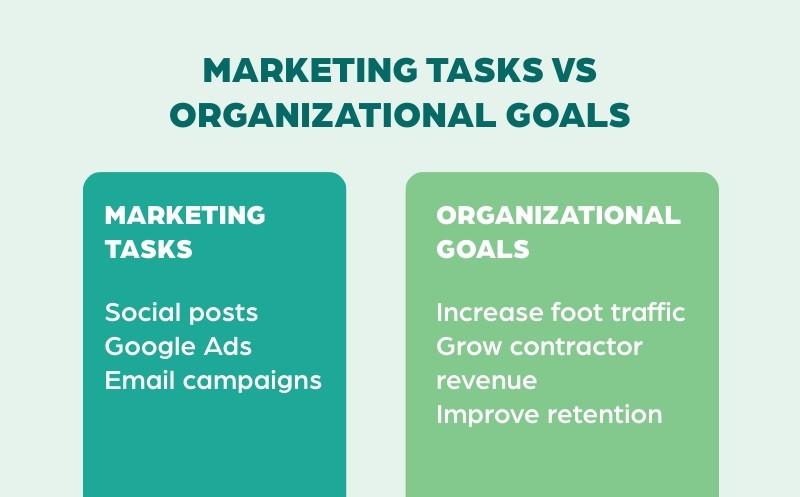
Every marketing task should support a larger business goal. When tasks are treated as goals, it becomes hard to evaluate performance or know where to focus. You stay busy, but you’re left guessing about what’s working.
Make Organizational Goals Measurable and Time-Bound
A goal you can’t measure is a goal you can’t act on. Without a way to track progress or a defined finish line, goals are hard to work toward and nearly impossible to evaluate.
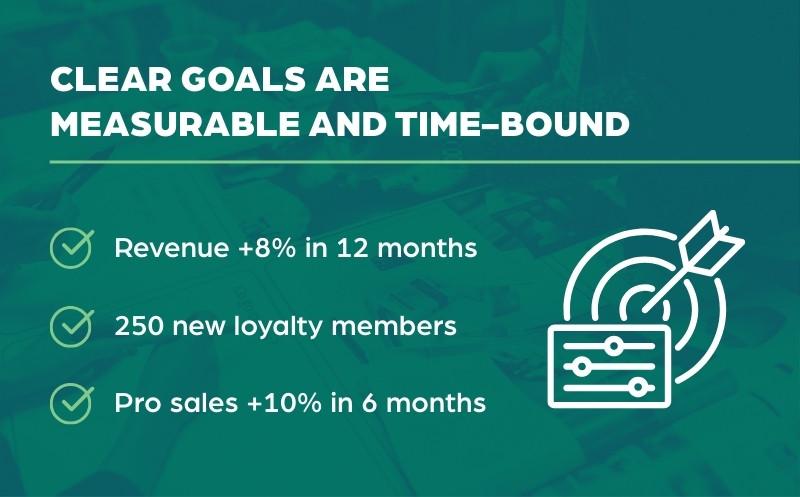
Measurable goals make it easier to track progress and adjust your marketing along the way. Time-bound goals help your team separate what matters now from what can wait.
What Clear Organizational Goals Look Like in Practice
Organizational goals shape how decisions get made across the business. Here’s the same ambition, “grow this year,” handled two ways.
Scenario 1: Goals Without Clarity
A hardware store knows it wants to “grow this year,” but hasn’t defined what that means. Some conversations focus on foot traffic. Others focus on contractors. Marketing shifts between social media, ads and promotions depending on what feels urgent.
Because there are no clear organizational goals:
- Marketing efforts feel scattered
- Budget decisions are harder to justify
- Success is difficult to measure
The team stays busy, but it’s unclear whether those efforts support the right outcomes.
Scenario 2: Goals With Direction
Another store starts by defining a small set of organizational goals:
- Grow pro and contractor relationships
- Increase repeat visits from local customers
- Improve performance in specific departments
With those goals defined, marketing decisions get easier. Channels are chosen intentionally. Budgets are allocated with purpose. Performance is judged against clear priorities. Instead of reacting month to month, the team works from a shared direction.
Why This Difference Matters
The difference between these two stores isn’t effort. It’s clarity.
Clear organizational goals give marketing a job to do. They create alignment across the business and keep energy from being spread too thin. This is also where structured peer conversations and shared benchmarks help: many owners find it easier to set goals, and stick to them, when they can see how other stores approach it.
Recommended Reading for Store Leaders
If you want to dig deeper into how goal-setting and strategic clarity drive growth, read Good Strategy / Bad Strategy by Richard Rumelt. It explains why many organizations struggle with strategy and how focused direction leads to better decisions across a business, a useful lens for owners juggling operations, staffing and marketing.
Quick Action Steps for Hardware Store Owners
Want to start applying this today? Begin here:
- Identify 3–5 core organizational goals. Focus on the outcomes that matter most right now, such as more contractor accounts, more repeat visits or growth in a specific department.
- Make each goal measurable. Decide how success will be tracked, so you can evaluate progress and adjust.
- Assign ownership. Give every goal one person responsible for tracking it and keeping the team aligned.
- Set a timeline. Decide whether each goal is quarterly, seasonal or annual.
- Align marketing with the goal. Once goals are set, social media, email, local SEO and advertising should all support those priorities.
Download the Organizational Goals Template
To help you put this into action, we’ve created a free Organizational Goals Template built specifically for hardware stores and lumberyards. It walks you through all five steps above in about 30–45 minutes.
Free template · Step 1 of 16
Organizational Goals Template
This template helps you:
- Define 3–5 core organizational goals
- Assign ownership and accountability
- Set measurable targets and timelines
- Connect goals directly to marketing efforts
Setting the Foundation for Smarter Marketing
Organizational goals are the foundation of effective marketing. Without them, even the best tactics fall flat. With them, marketing becomes focused, measurable and tied to real business priorities.
It’s the same approach we use at Mountain Mojo Group when helping hardware stores and lumberyards build marketing strategies that drive growth, not just activity.
Once your organizational goals are defined, the next step is turning them into revenue targets that guide budgeting and channel decisions.
If you’re looking to continue learning alongside other independent hardware owners, community-driven education can be a powerful next step.
Want help applying this to your store?
A short discovery call can clarify where to focus and what’s realistic for your business.
The Hardware Marketing Series
This article is part of our complete marketing strategy framework for independent hardware stores, lumberyards, farm stores and ag stores, including retailers affiliated with Ace Hardware, True Value and Do it Best, and suppliers such as Orgill. Work through all 16 steps to build your strategy in a structured, intentional way. See the full series.
- How to Create Organizational Goals for Your Hardware Store (you’re here)
- How to Create Revenue Goals
- How to Perform a Market Share & Competitive Analysis
- How to Create Customer Surveys
- How to Define Mission, Vision & Core Values
- How to Audit Your Branding
- How to Create Target Personas with Shopping Behaviors
- How to Audit Social Media, Google Ads & SEO
- How to Build & Maintain Your Google Business Profile
- How to Build a Social Media Plan
- How to Build an SEO Strategy
- How to Build Social Media & Google Ads Campaigns
- How to Build an Email Newsletter
- How to Build a Content Calendar
- How to Build a Marketing Budget
- How to Build a Holistic Marketing Strategy