
Hardware Marketing Series · Part 5 of 16
Mission, vision and core values often get a bad reputation.
For many businesses, they live on a wall, a website footer or an employee handbook and rarely show up in day-to-day decisions. That’s why they can feel vague or unnecessary. But done right, they work as decision-making tools.
For hardware stores and lumberyards, they clarify why your business exists, where you’re headed and how you show up for customers and employees.
At Mountain Mojo Group, we see the strongest marketing strategies built on a clear foundation. Mission, vision and core values align your internal culture with your external messaging, so marketing feels authentic, not forced. Here’s how to create statements that guide decisions and support long-term growth.
This guide is Part 5 of our 16-part hardware marketing series. Each article walks through one step in building a connected marketing strategy for independent hardware stores and lumberyards, from organizational clarity to a complete marketing system built for long-term growth.
Free template · Step 5 of 16
Mission, Vision & Core Values Template
This template helps you:
- Define a clear mission statement
- Articulate a realistic vision for the future
- Identify core values that guide behavior and culture
- Connect all three to your marketing
Why Mission, Vision & Core Values Matter for Hardware Stores and Lumberyards
Hardware stores and lumberyards are community businesses. Customers don’t just choose where to buy tools, lumber and equipment; they choose who they trust for advice, service and support. Mission, vision and core values help communicate that trust.
When these elements are clear:
- Employees understand expectations
- Customers understand what makes you different
- Marketing messaging becomes more consistent
- Decisions get easier
When they’re unclear, marketing feels generic and culture drifts.
Your statements shouldn’t sound like every other retailer’s. They should reflect how your store serves customers, supports its team and contributes to the community. They don’t need to be flashy. They need to be real.
Curious how we approach this at Mojo? Read our mission and values.

Step 1: Define Your Mission (Why You Exist)
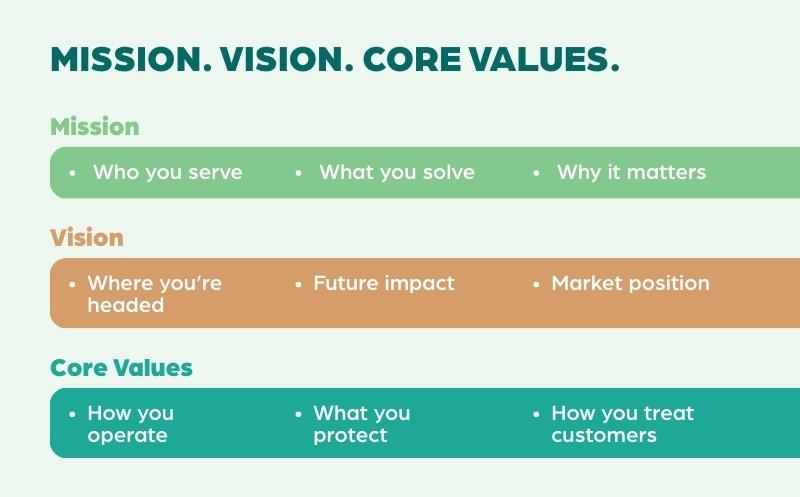
Your mission explains why your hardware store or lumberyard exists today. It should answer:
- Who do we serve?
- What problem do we solve?
- Why does our work matter?
A strong mission statement is clear, practical and customer-focused.
Examples of strong mission themes (directional, not copy-and-paste):
- Helping customers complete projects with confidence
- Supporting contractors with reliable products and practical expertise
- Serving the local community with trusted, dependable service
Avoid vague language like “being the best” or “providing excellent service.” Those phrases sound good but don’t guide decisions or behavior. Focus instead on what you actually do, who you serve and how your business shows up day to day. A strong mission is clear enough that employees can use it to make decisions and understand what success looks like in their role.
Step 2: Define Your Vision (Where You’re Headed)
Your vision describes what the future looks like for your business. It’s aspirational, but grounded in reality. A strong vision answers:
- Where do we want to be in 3–5 years?
- How do we want customers to describe us?
- What impact do we want to have in our market?
For hardware stores, vision may relate to growth and expansion, becoming the go-to resource for pros, deeper community involvement or a better customer experience.
For lumberyards, vision may focus on stronger contractor and builder relationships, expanded product depth or services, better reliability, speed or fulfillment, or becoming a preferred partner for local construction projects.
Your vision aligns long-term decisions, gives context to growth goals and helps marketing tell a consistent story about where your store is headed.
Step 3: Define Core Values (How You Show Up)
Core values define how your team operates, especially when no one is watching. They show up in how problems get handled, how customers are treated and how decisions are made under pressure.
Strong core values guide behavior, shape culture, influence hiring and training, and support a consistent customer experience. Instead of listing generic values, ask:
- What behaviors do we expect from our team?
- What do customers consistently appreciate about us?
- What would we never compromise on?
Meaningful value themes might include reliability, expertise, community commitment, integrity and accountability. Whatever you choose, make it actionable. If a value doesn’t influence decisions, it’s just a word.
Mojo Tip: Three to five core values is the sweet spot. When values are limited and clearly defined, teams are more likely to remember them and actually use them to guide decisions.
Step 4: Align Mission, Vision & Values With Your Marketing Strategy
Mission, vision and core values should show up in your marketing, not as slogans but as themes. They shape your messaging tone, content topics, brand voice and customer experience expectations. For example:
- A mission centered on education may lead to more how-to content.
- A value around community may drive local partnerships.
- A vision focused on growth may guide where you invest in channels.
When marketing reflects who you are and where you’re going, it feels more authentic and consistent. If you haven’t yet, the earlier guides in this series walk through organizational goals, revenue goals and market share and competitive analysis step by step.
Quick Action Steps for Hardware Store and Lumberyard Owners
Want to start defining your mission, vision and core values? Begin here:
- Write a simple draft mission statement. Focus on who you serve, what you help customers accomplish and why your business exists.
- Describe the future you want to build. Picture where you want your store or lumberyard to be in three to five years.
- Identify 3–5 core values. Choose values that reflect real behaviors your team should show every day.
- Involve your leadership team. These statements are stronger when they reflect shared input and real experience.
- Use them to guide decisions. Once defined, let them shape hiring, culture, marketing messaging and long-term planning.
Download the Mission, Vision & Core Values Template
To help you put this into action, we’ve created a free Mission, Vision & Core Values Template built specifically for hardware stores and lumberyards. It builds on the organizational goals, revenue goals, competitive analysis and customer survey work from earlier in the series, so your foundation stays aligned.
Free template · Step 5 of 16
Mission, Vision & Core Values Template
This template helps you:
- Define a clear mission statement
- Articulate a realistic vision for the future
- Identify core values that guide behavior and culture
- Connect all three to your marketing
Build a Brand That Feels Real
Mission, vision and core values create alignment, both internally and externally. When they’re clear, marketing feels more authentic, culture becomes more consistent and growth decisions are easier to make.
It’s the same approach we use at Mountain Mojo Group to help hardware stores and lumberyards build brands customers trust and teams are proud to be part of.
In the next guide, we’ll cover how to audit your branding so you can make sure what you’re putting into the world reflects who you are.
Want help applying this to your store?
A short discovery call can help you define or refine what your store or yard stands for and where it’s headed.
The Hardware Marketing Series
This article is part of our complete marketing strategy framework for independent hardware stores, lumberyards, farm stores and ag stores, including retailers affiliated with Ace Hardware, True Value and Do it Best, and suppliers such as Orgill. Work through all 16 steps to build your strategy in a structured, intentional way. See the full series.
- How to Create Organizational Goals for Your Hardware Store
- How to Create Revenue Goals
- How to Perform a Market Share & Competitive Analysis
- How to Create Customer Surveys
- How to Define Mission, Vision & Core Values (you’re here)
- How to Audit Your Branding
- How to Create Target Personas with Shopping Behaviors
- How to Audit Social Media, Google Ads & SEO
- How to Build & Maintain Your Google Business Profile
- How to Build a Social Media Plan
- How to Build an SEO Strategy
- How to Build Social Media & Google Ads Campaigns
- How to Build an Email Newsletter
- How to Build a Content Calendar
- How to Build a Marketing Budget
- How to Build a Holistic Marketing Strategy