
Hardware Marketing Series · Part 13 of 16
Email newsletters support awareness, consistency and action for hardware stores and lumberyards. They keep your store visible between visits, reinforce what you want to be known for and give customers a simple next step when the timing is right.
The value comes from structure, not volume.
This guide explains how to build an email newsletter that’s purposeful and repeatable, and how it works alongside the other pieces of a complete hardware store and lumberyard marketing strategy.
This guide is Part 13 of our 16-part hardware marketing series. Each article walks through one step in building a connected marketing strategy for independent hardware stores and lumberyards, from organizational clarity to a complete marketing system built for long-term growth.
Free guide · Step 13 of 16
Email Newsletter Guide
This guide helps you:
- Set a clear purpose for each send
- Define the audience before you write
- Use a repeatable newsletter structure
- Track performance and improve over time
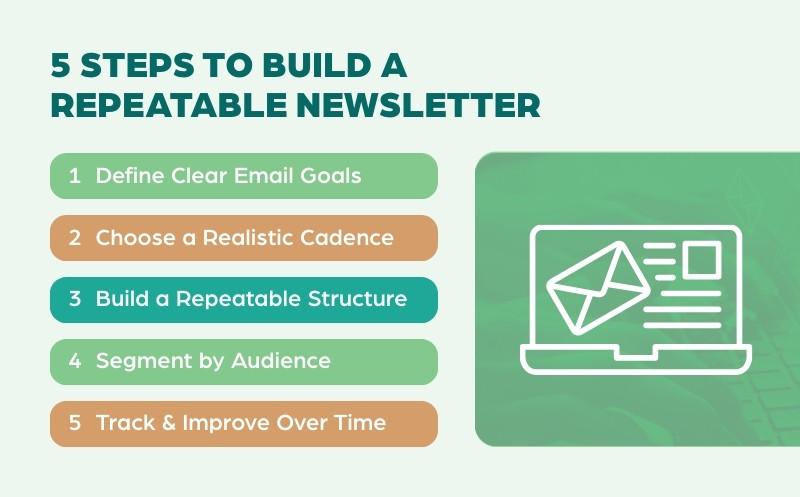
Step 1: Define Clear Email Goals
Some newsletters are designed to educate or engage. Others are designed to drive action. Common goals for hardware stores and lumberyards include:
- Promoting events or workshops
- Highlighting seasonal projects
- Driving traffic to services or departments
- Supporting contractor relationships
If your email goals are unclear, start with your organizational goals. They give every marketing channel its direction. Read How to Create Organizational Goals for Your Hardware Store and Lumberyard.
Step 2: Choose a Realistic Sending Cadence
There’s no single correct frequency. Your schedule should reflect your goals, your available content and your internal capacity. Common cadences are monthly, bi-monthly or quarterly. When starting from scratch, choose one you can maintain. Consistency matters more than frequency.
Real-world example: Think about the emails you actually read. As a consumer, you probably engage with brands that show up consistently, but not too often. Too many emails feel noisy; too few are easy to forget.
The same is true in B2B. Contractors and business customers value relevance and predictability. A monthly or quarterly email that reliably shares useful updates, services or reminders beats frequent emails with no clear purpose. Consistency builds familiarity, and familiarity builds trust.
Step 3: Build a Repeatable Newsletter Structure
A strong newsletter follows a consistent flow, which makes it easier to create and easier for readers to engage with. Map your ideal structure based on what you want customers to see. Common sections include:
- A primary message or feature
- One or two supporting stories or updates
- Events, promotions or seasonal reminders
- A clear call to action
Once your structure is set, keep it consistent. That’s what lets you collect meaningful data over time.
Step 4: Define the Audience for Each Email
Not every email should go to every customer. Newsletters work best when they’re written for a specific audience with a clear need or interest. Common audiences for hardware stores and lumberyards include:
- DIY homeowners
- Contractors and pro customers
- Location-specific customer lists
- Event or promotion-focused segments
- B2B or account-based customers
Defining the audience first makes it easier to choose relevant content, write clearer calls to action and support different business goals with different emails. It works best when your email audiences line up with your target personas. If you haven’t defined those yet, start with How to Create Target Personas with Shopping Behaviors.
Step 5: Track, Test and Improve Over Time
Newsletters get more effective when you review performance consistently. Over time, look for patterns: where people click, which content gets the most engagement and which links drive action. Avoid changing everything at once. Small adjustments beat constant resets.
Track the Metrics That Match Your Goal
Not every newsletter has the same purpose, so always start with the campaign’s goal. At a minimum, track open rate and click-through rate. Depending on the goal, you may also track conversions or signups, purchases, unsubscribe rate and engagement over time. As goals change, the metrics you focus on should too.
Mojo Hack: When linking to your website from an email, use UTM tracking links. UTMs show what happens after someone clicks, tying your newsletter to real website activity.
Test Send Times
There are general best practices for email timing, but your audience may behave differently. Test different days of the week and times of day, track performance and adjust gradually. Let your data guide the decision.
Use a Simple Pre-Send Checklist
Before every send, confirm that:
- The subject line is clear and relevant
- Spelling and grammar are correct
- All links work
- Branding is consistent (fonts, colors and logo)
- Tracking is enabled
A short checklist prevents avoidable mistakes. If you’d like help reviewing your email data or figuring out what the numbers mean, book a discovery call with Rand.
What This Looks Like in Practice
Without structure, sends are irregular, the layout changes every time and there’s little insight into performance.
With structure, you have a predictable cadence, a clear content flow and data that supports improvement. Email becomes a system, not a scramble.
Quick Action Steps for Hardware Store and Lumberyard Owners
Want to improve your store’s email newsletter? Begin here:
- Define the purpose of your newsletter. Decide whether it should support events, seasonal projects, services or contractor communication.
- Choose a realistic sending cadence. Monthly or quarterly is often easiest to maintain while keeping your store visible.
- Create a consistent structure. Use the same sections in every email so customers recognize the format.
- Segment your audience. Separate lists for homeowners, contractors or locations keep emails relevant.
- Track engagement and adjust. Review opens, clicks and conversions to see what content resonates.
Small improvements over time lead to stronger engagement.
Download the Email Newsletter Guide
To help you build and maintain a consistent newsletter, we’ve created a free Email Newsletter Guide built specifically for hardware stores and lumberyards. Use it to plan each send, from purpose and audience to structure, a pre-send checklist and the metrics to review.
Free guide · Step 13 of 16
Email Newsletter Guide
This guide helps you:
- Set a clear purpose for each send
- Define the audience before you write
- Use a repeatable newsletter structure
- Track performance and improve over time
Build Relationships Over Time
Email newsletters aren’t about one send. They’re about showing up consistently. When your newsletter has a clear purpose and a repeatable structure, it becomes a dependable part of your overall marketing system.
In the next guide, we’ll cover how to build a content calendar that keeps your newsletter, social media and website content working together.
Want help applying this to your store?
A short discovery call can help you build or refine an email newsletter strategy for your store.
The Hardware Marketing Series
This article is part of our complete marketing strategy framework for independent hardware stores, lumberyards, farm stores and ag stores, including retailers affiliated with Ace Hardware, True Value and Do it Best, and suppliers such as Orgill. Work through all 16 steps to build your strategy in a structured, intentional way. See the full series.
- How to Create Organizational Goals for Your Hardware Store
- How to Create Revenue Goals
- How to Perform a Market Share & Competitive Analysis
- How to Create Customer Surveys
- How to Define Mission, Vision & Core Values
- How to Audit Your Branding
- How to Create Target Personas with Shopping Behaviors
- How to Audit Social Media, Google Ads & SEO
- How to Build & Maintain Your Google Business Profile
- How to Build a Social Media Plan
- How to Build an SEO Strategy
- How to Build Social Media & Google Ads Campaigns
- How to Build an Email Newsletter (you’re here)
- How to Build a Content Calendar
- How to Build a Marketing Budget
- How to Build a Holistic Marketing Strategy