
Hardware Marketing Series · Part 16 of 16
A holistic marketing strategy connects everything.
Goals. Channels. Content. Budget.
Without that connection, marketing becomes fragmented. Each channel operates on its own, and effort increases while clarity doesn’t.
A holistic strategy brings structure. It ensures every marketing decision supports the same priorities and works toward the same outcomes. This guide explains how to bring all the pieces together into one connected marketing system that’s realistic to maintain and built around how hardware stores and lumberyards actually operate.
This guide is Part 16 of our 16-part hardware marketing series. Each article walks through one step in building a clear, connected marketing strategy for independent hardware stores and lumberyards. Follow the full series to move step by step from organizational clarity to a complete marketing system designed to support long-term growth.
Free guide · Step 16 of 16
Holistic Marketing Strategy Guide
This guide helps you:
- Connect goals, channels, content and budget
- See how each piece fits into one system
- Build a strategy you can maintain over time
How Business Goals Drive Hardware & Lumberyard Growth
Organizational goals keep a holistic marketing strategy aligned.
They help ensure:
- Marketing channels support the same priorities
- Content reflects what the business is trying to achieve
- Budget decisions stay focused instead of reactive
When organizational goals guide decisions, marketing works as one connected system rather than separate efforts.
How Revenue Goals Shape a Holistic Marketing Strategy
Revenue goals give structure to a holistic marketing strategy.
They help determine:
- How aggressive marketing efforts should be
- Which channels require more support
- What level of investment is realistic
Rather than adding pressure, revenue goals set boundaries that keep marketing grounded in business reality.
Understand Your Market and Your Customers
Strategy requires context.
Market analysis shows:
- Where opportunities exist
- How competitors position themselves
- Where differentiation matters
Target personas clarify:
- Who you are speaking to
- How customers shop
- What influences decisions
Together, these insights shape messaging, channels and content.
Build Channel Strategies That Work Together
A holistic strategy doesn’t treat channels as separate efforts.
Each channel plays a role:
- Social media builds awareness and familiarity
- Google Ads capture high-intent searches
- Email supports consistency and repeat engagement
- SEO builds long-term visibility
The goal is alignment, not volume.
Use a Content Calendar to Execute Consistently
Strategy only works if it can be executed.
A content calendar turns plans into action by:
- Connecting goals, personas and platforms
- Showing what is being posted and when
- Making content manageable over time
Without a calendar, even strong strategies break down.
Align Strategy With a Realistic Marketing Budget
A holistic strategy must be supported financially.
Your budget should:
- Reflect priorities
- Match execution capacity
- Separate fixed and flexible spend
- Allow room for adjustment
Budgeting brings accountability and clarity to strategy.
Read: How to Build a Marketing Budget for Your Hardware Store and Lumberyard
Connecting Internal Teams Around the Strategy
A holistic marketing strategy only works when it is understood beyond the marketing function.
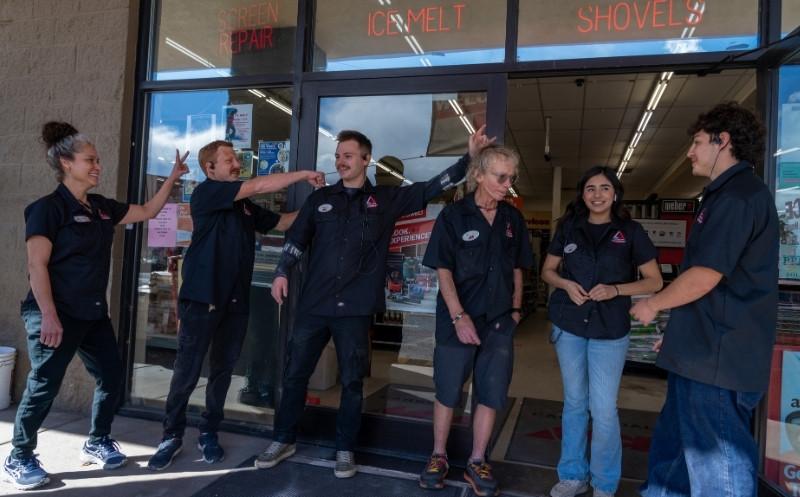
Hardware stores and lumberyards often involve multiple people in execution. Owners, managers, floor staff, contractors and external partners may all influence how marketing shows up in the real world. If the strategy lives only in one place, alignment breaks down quickly.
Internal alignment helps ensure:
- Messaging matches what customers hear in-store
- Promotions are supported by operations and inventory
- Teams understand what marketing is trying to accomplish
Marketing shouldn’t feel separate from daily operations. It should support them.
For example:
- If contractor growth is a priority, sales and marketing should reinforce the same services and benefits
- If seasonal promotions are planned, staff should know what is being promoted and why
- If brand positioning emphasizes service and expertise, that should show up in customer interactions
A holistic strategy becomes more effective when teams understand the direction and how their role supports it.
Mojo Tip: You don’t need to share the full strategy document with everyone. A simple summary of priorities, focus areas and key campaigns is often enough to create alignment. When internal teams are aligned, marketing feels consistent from first impression to in-store experience. That consistency builds trust and reinforces the strategy at every touchpoint.
Review, Adjust and Improve Over Time
A holistic strategy isn’t static.
It should be reviewed regularly:
- Monthly performance check-ins
- Quarterly strategy alignment
- Seasonal adjustments
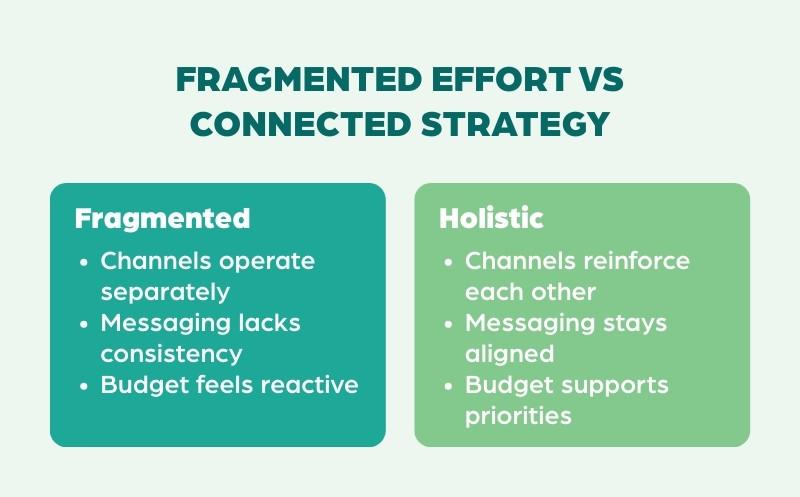
This keeps marketing proactive instead of reactive. Small refinements over time lead to stronger results.
What a Holistic Marketing Strategy Looks Like in Practice
A hardware store builds its strategy step by step.
Goals are clear. Channels are defined. Content is planned. Budget supports execution.
Each piece reinforces the others. Marketing feels intentional, not overwhelming. That’s the difference between activity and strategy.
Download the Holistic Marketing Strategy Guide for Hardware Stores
To help you bring all of this together, we created a Holistic Marketing Strategy Guide designed specifically for hardware stores and lumberyards.
Free guide · Step 16 of 16
Holistic Marketing Strategy Guide
This guide helps you:
- Connect goals, channels, content and budget
- See how each piece fits into one system
- Build a strategy you can maintain over time
Bring It All Together
A holistic marketing strategy isn’t about doing more. It’s about connecting what you’re already doing.
When goals, channels, content and budget work together, marketing becomes clearer, more efficient and easier to manage.
Want help applying this to your store?
If you would like help building or refining a holistic marketing strategy for your hardware store or lumberyard, a short discovery call can help.
The Hardware Marketing Series
You’ve now seen the full framework. This 16-part series was designed to help hardware stores and lumberyards build a complete, connected marketing system. From defining organizational goals to planning budgets and executing across channels, each guide covers one step in building a strategy that supports long-term growth.
If you missed any step along the way, you can revisit the full series below. Each article focuses on a specific part of the process so you can move at your own pace and apply what matters most to your store. See the full series.
- How to Create Organizational Goals for Your Hardware Store
- How to Create Revenue Goals
- How to Perform a Market Share & Competitive Analysis
- How to Create Customer Surveys
- How to Define Mission, Vision & Core Values
- How to Audit Your Branding
- How to Create Target Personas with Shopping Behaviors
- How to Audit Social Media, Google Ads & SEO
- How to Build & Maintain Your Google Business Profile
- How to Build a Social Media Plan
- How to Build an SEO Strategy
- How to Build Social Media & Google Ads Campaigns
- How to Build an Email Newsletter
- How to Build a Content Calendar
- How to Build a Marketing Budget
- How to Build a Holistic Marketing Strategy (you’re here)